

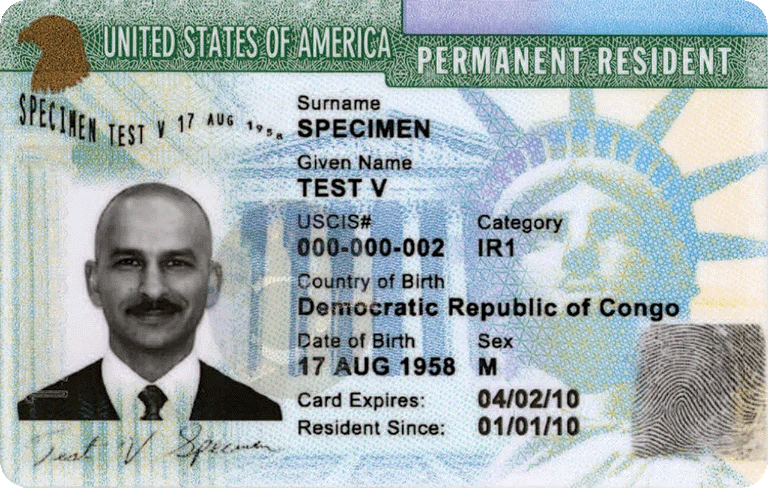
If you’re a green card holder, this week’s Supreme Court ruling should be on your radar — especially if you travel internationally, have ever had a brush with the law, or know someone who has.
On June 23, the Supreme Court decided Blanche v. Muk Choi Lau, and the bottom line is this: border officers can now strip a green card holder of their protected status at the border, based on a criminal charge alone — even before any conviction — and justify it later. Three justices dissented, calling it a blank check for the government. They’re not wrong to be worried.
When you hold a green card, you’ve earned something real. You’ve gone through a lengthy process, you’ve built a life here, and the law recognizes that. One of the benefits is that when you travel abroad and come back, immigration law is supposed to treat you as already home — not as someone applying to get in for the first time.
That protection exists because Congress understood that LPRs (lawful permanent residents) aren’t tourists. You live here. This is your life.
But there are six situations where the government can override that protection and treat you like you’re seeking admission for the first time. One of them is if you’ve “committed an offense” involving what the law calls “moral turpitude” — basically crimes involving dishonesty or bad moral character, like fraud or theft. That exception is what this whole case is about.
Lau got his green card in 2007 and built his life in the U.S. In 2012, New Jersey charged him with selling counterfeit clothing. He hadn’t been convicted — just charged — when he made a short trip to China.
When he landed back at JFK, border officers saw his pending charge and made a call: they weren’t going to treat him as already home. Instead, they paroled him — let him physically enter the country but without formally admitting him, leaving his status in legal limbo.
Then they took his green card.
In its place, they gave him a handwritten piece of paper — an I-94 arrival card with a stamp and a scribbled notation. That scrap of paper was his only proof of immigration status for the next 14 years while the courts sorted this out.
After Lau eventually pleaded guilty to the counterfeiting charge, the government came after him for removal, but not as someone who’d been living here for years and could be deported. As someone “seeking admission,” like he’d just shown up at the door. That’s a crucial difference, because in that framing, Lau had to prove he deserved to stay, rather than the government having to prove he should go.
This is the part that gets lost in legal jargon, so let’s be plain about it. There are two ways the government can try to remove a green card holder:
By treating Lau as “seeking admission” rather than as someone already home, the government flipped who had to prove what. That’s not a technicality. That’s the difference between having the law on your side and having to fight uphill from the start.
The 6–3 majority ruled that border officers do not need “clear and convincing evidence” that you committed a crime before reclassifying you. They can make that call on the spot, and the government can back it up later — at the removal hearing, potentially years down the line.
The majority read the statute and said: the law says “has committed,” not “has been convicted of.” So a conviction isn’t required to trigger the exception. A pending charge can be enough.
Justice Jackson, writing for herself and Justices Sotomayor and Kagan, put it directly: the government now has a “massive blank check.”
Her argument is straightforward. The law says an LPR “shall not be regarded as seeking admission” unless an exception applies. “Shall not” isn’t a suggestion — it’s a command. It means the government has to confirm an exception exists before it demotes your status, not after.
Under the majority’s ruling, in the worst case, a border officer could reclassify any returning green card holder based on nothing more than suspicion, let the government gather evidence over the following months or years, and then use that later evidence to retroactively justify what the officer did at the border. And if you’re ultimately acquitted? The case might collapse — but you’ve already spent years without your real green card, potentially unable to prove you can work, open a bank account, get housing, or enroll in school.
The dissent and the amicus briefs in this case paint a clear picture of what being paroled without your green card actually means day-to-day:
Green card holders are the people who chose this country, did the paperwork, waited in line, and built lives here. The law was supposed to reflect that — to say you don’t have to prove yourself at the border every time you come home from visiting family.
This ruling chips away at that. It says the government can treat you as a newcomer seeking entry, based on an unproven charge, and sort it out later. Three Supreme Court justices thought that was wrong enough to write separately about it. They’re not alone.
If you’re a green card holder, get informed, talk to an immigration attorney if you have any legal history, and make sure your community knows this has changed.